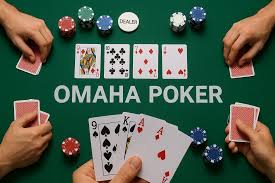
dominiimpianti.com–The first time you watch Omaha, it looks like Texas Hold’em with extra private cards—until the community cards hit the table and everyone suddenly starts talking about “exactly two.” That’s the real heart of the Omaha hold ’em community question: the board belongs to everyone, but the way you’re allowed to use it is stricter than most beginners expect.
If you learn one thing today, let it be this: in Omaha, the community cards are shared, but they don’t “give” you a hand unless your private cards connect the right way.
The board is shared, the rules are not negotiable
Omaha uses five community cards, revealed in the familiar rhythm:
-
flop (3 cards)
-
turn (1 card)
-
river (1 card)
So far, it looks like Hold’em. The difference is how you build your final hand.
In Omaha hold ’em, you must make your best five-card hand using:
-
exactly two of your private (hole) cards, and
-
exactly three community cards.
Not “up to two.” Not “any combination.” Exactly two + exactly three.
That single constraint is why people misread Omaha showdowns more than any other poker-style game.
Why the “exactly two” rule matters so much
In Texas Hold’em, you can sometimes “play the board,” meaning the best five-card hand is entirely on the table. In Omaha, you can’t. The board can be amazing, but you still need two hole cards that legally complete the hand.
Here’s the practical consequence: boards that look like “everyone has a straight” often don’t actually give everyone a straight. Many players are drawing to something that appears obvious but isn’t available under the two-from-hand rule.
This creates a common beginner trap: you think you’re safe because the board is scary for everyone—when in reality, it might be scary only for you.
Community card texture: how to read the board like an Omaha player
“Omaha board texture” is just a fancy way of saying: what does the shared board enable?
Three board features matter most:
Suits (flush pressure)
If the flop comes with two cards of the same suit, the table will feel immediate tension. But in Omaha, flushes collide more often because players hold more suited combinations. That makes “pretty” flushes risky—especially if you can’t form the highest possible flush.
Connectivity (straight pressure)
Connected boards (like 8-9-10) generate heavy straight possibilities. With more hole cards in play, more people can connect in more ways. The same board that’s “interesting” in Hold’em becomes a traffic jam in Omaha.
Pairing (full house pressure)
A paired board increases the chance that someone can make a full house by the river. In Omaha, players often have more ways to hit trips or boats, so the moment the board pairs, many hands lose value quickly.
A calm habit: after each street (flop/turn/river), ask “What strong hands became possible now?”—not “Did I improve?”
The clean dealing flow (and where confusion starts)
Most tables deal Omaha community cards exactly like Hold’em:
-
private cards dealt first,
-
betting round,
-
flop,
-
betting round,
-
turn,
-
betting round,
-
river,
-
betting round,
-
showdown.
Confusion usually shows up at showdown because players try to assemble five cards the Hold’em way. If you’re ever unsure, do this simple check:
-
Point to the two hole cards you’re using.
-
Point to the three board cards you’re using.
-
Read the five-card hand out loud.
It feels slow, but it prevents arguments and “Wait—can I use that card?” moments.
Common mistakes beginners make with community cards
These are the errors that show up in almost every learning group:
-
Using only one hole card with four board cards (not allowed).
-
Assuming the board gives everyone the same hand (Omaha blocks that).
-
Overvaluing non-nut hands on coordinated boards (second-best hands are common).
-
Forgetting the board can counterfeit you (a turn/river card can make your hand effectively weaker).
That last one matters: in Omaha, “good on the flop” can become “barely playable” by the river because the shared board evolves for everyone.
Community doesn’t just mean cards—it also means people
The word “community” fits Omaha in two ways: community cards and community learning. Omaha is easier to enjoy when you learn in a group, because many “aha” moments come from seeing what you missed at showdown.
A healthy learning community tends to do a few things well:
-
agrees on the exact format before playing (high-only vs hi-lo, pot-limit vs limit)
-
encourages clean showdowns (“show two, show three”)
-
avoids angle-shooting or rushing beginners
-
treats misreads as teachable, not embarrassing
If you’re teaching new players, the best early lesson isn’t a strategy tip—it’s enforcing the hand-building rule until it becomes automatic.
One subtle insight most beginners miss
In Omaha, your hand isn’t “what you have.” It’s “what you can legally make with the board.” That mental shift sounds small, but it changes everything: you stop staring at your four cards like a treasure chest and start looking at them like building materials that must fit a shared blueprint.
When you internalize that, the community cards stop feeling like random drama and start feeling like structured information.
The community board is the stage, but the “exactly two from hand, exactly three from board” rule is the script. Once you understand how the Omaha hold ’em cards interact with your private cards, you’ll read hands faster, misread less, and enjoy the game for what it really is: a shared puzzle that changes one card at a time.